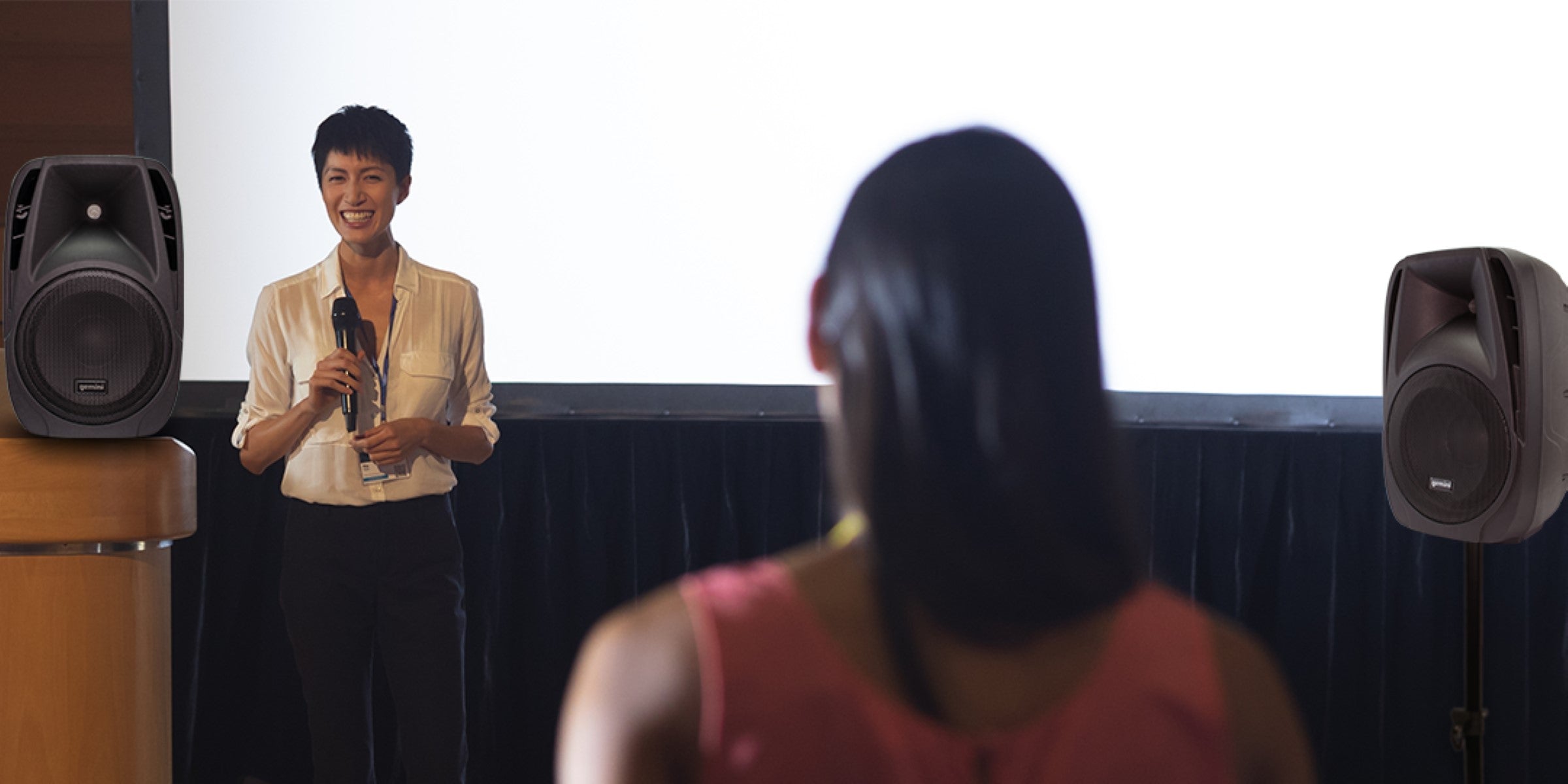
How to set up outdoor speakers
To set up outdoor speakers, mount them under an eave or on a covered wall about 8 to 10 feet apart and angled toward where people sit, run outdoor-rated speaker wire back to your amp or receiver, then strip the ends, match positive to positive and negative to negative at both ends, and play a song to check the balance before you tidy the cable. That's the whole job for a permanent pair. If you'd rather skip the drill entirely, a portable Bluetooth speaker gets you sound in the backyard in about 30 seconds.
Below we'll walk through both paths, what to look for so the speakers survive the weather, and the placement tricks that make a backyard actually sound good. You can browse the full lineup any time on our outdoor speakers collection.
Portable or permanent? Pick your path first
Start here, because it decides everything else. If you want music in the yard this weekend with no wiring, go portable. If you want speakers that live outside year-round and disappear into the patio, go permanent.
Portable is the easy answer for cookouts, pool days, and parties you might move to the driveway or the beach. You charge it, pair your phone, and you're done. The Gemini Sound GGO-230L is a good example: dual 3" woofers and passive bass ports for real low end you can carry in one hand, around 7 hours of playtime per charge, an IPX4 rating so a little rain won't end the night, and LED party lights that pulse with the music. It even ships with a wired mic for karaoke. For more options like it, the party speakers collection is the place to look.
Permanent means a mounted pair wired back to an amp or receiver, the kind of setup that turns a patio into a real listening space. Our wall mount speakers are built for exactly this, with weather-sealed cabinets and brackets that let you angle each one at the seating area. If you'd rather the speakers hide in the landscaping instead of on a wall, the outdoor rock speakers look like garden stones and tuck in next to the flower beds.

What to check before you buy
Three things decide whether outdoor speakers actually hold up: the size of your space, the weather rating, and how much power they need.
- Match the speakers to the space. A small patio is happy with one good portable speaker or a single mounted pair. A big yard or a deck plus a pool area usually wants two pairs so the sound carries without you cranking the volume into distortion.
- Look at the IP rating. This is the number that tells you how well a speaker shrugs off dust and water. The GGO-230L is rated IPX4, which covers splashes and rain. Our mounted GHSI outdoor pairs are IP44 rated, built to stay up through the seasons. If a listing doesn't publish an IP rating, treat it as indoor-only.
- Plan for power and wiring. Portable speakers run off a battery, so there's nothing to plan. For a wired pair, you'll connect them to an amp or receiver, so check that your amp can drive the pair and pick the right speaker wire for the run, which we cover just below.
Set up a permanent pair: step by step
A mounted pair takes an afternoon and basic tools. Here's the order that works.

- Choose the spots. Aim for sheltered spots, under an eave or on a covered patio wall, where the speakers throw sound toward where people actually sit. Two speakers 8 to 10 feet apart, angled inward, beats four speakers scattered at random.
- Mount the brackets. Hold the bracket up, mark the holes, drill, and screw it in. Use a level so the speaker sits straight, then clip or bolt the speaker onto the bracket and angle it down toward ear level at the seating area.
- Run the wire. Pull outdoor-rated speaker wire from your amp or receiver to each speaker. For runs under about 50 feet, 16-gauge wire is fine; go to 14-gauge for longer runs or higher-power speakers. Tuck the wire along trim or inside conduit so it's protected and out of sight.
- Connect everything. Strip about half an inch of insulation off each end. Match positive to positive and negative to negative at both the speaker and the amp. Getting this consistent on both speakers keeps your bass tight instead of thin. Weatherproof connectors are worth it outdoors.
- Test before you tidy. Play a song you know well and listen to each side. Confirm both speakers fire and the left and right balance is even, then secure the last of the cable. Test first, clean up second, so you're not undoing clips to fix a loose connection.
Safety while you wire
You're working with mains power at the amp, so switch it off before you connect anything. Mount each speaker firmly so it can't work loose and fall, and route the wire where no one will trip on it or catch a mower over it. If reaching the mounting spot means a tall ladder or fishing wire through a finished wall, there's no shame in having an installer handle that part.
Place them so the yard actually sounds good
Placement does more for outdoor sound than almost anything on the spec sheet. Sound spreads outside with no walls to bounce it back, so a couple of habits go a long way:
- Point the speakers toward the seating area, not out at the neighbors, and get them up near ear height when you sit. Angling a mounted speaker down at the patio beats blasting it straight ahead.
- Spread a pair apart rather than clustering them. Wider spacing fills the space more evenly and means less volume to cover the same ground.
- For a big yard, two modest pairs in different corners sound better and cleaner than one pair pushed past its limit.
Keep them sounding new
Outdoor speakers are built to take weather, but a little care keeps them going for years. Wipe the cabinets down with a soft, dry cloth now and then to clear dust and pollen, and skip harsh cleaners that can eat at the finish or the grille. Before a hard freeze or a long stretch of nobody using the patio, cover a mounted pair or bring a portable speaker inside. Five minutes of upkeep adds seasons of life.
A quick note on the wins
The right outdoor speakers do more than play music. They set the mood for a barbecue, carry the game out to the deck, and make the backyard somewhere people want to linger. A clean, well-placed setup is also a genuine selling point if you ever list the house, since it shows the outdoor space was built for spending time in.
Get started
Pick your path, match the speakers to your space, and mind the weather rating, and you'll have a yard that sounds as good as it looks. We've been building audio gear families actually use since 1974, so if you're stuck between a portable speaker and a mounted pair, start with the outdoor speakers collection and reach out to our team anytime. We're happy to help you get it right the first time.